

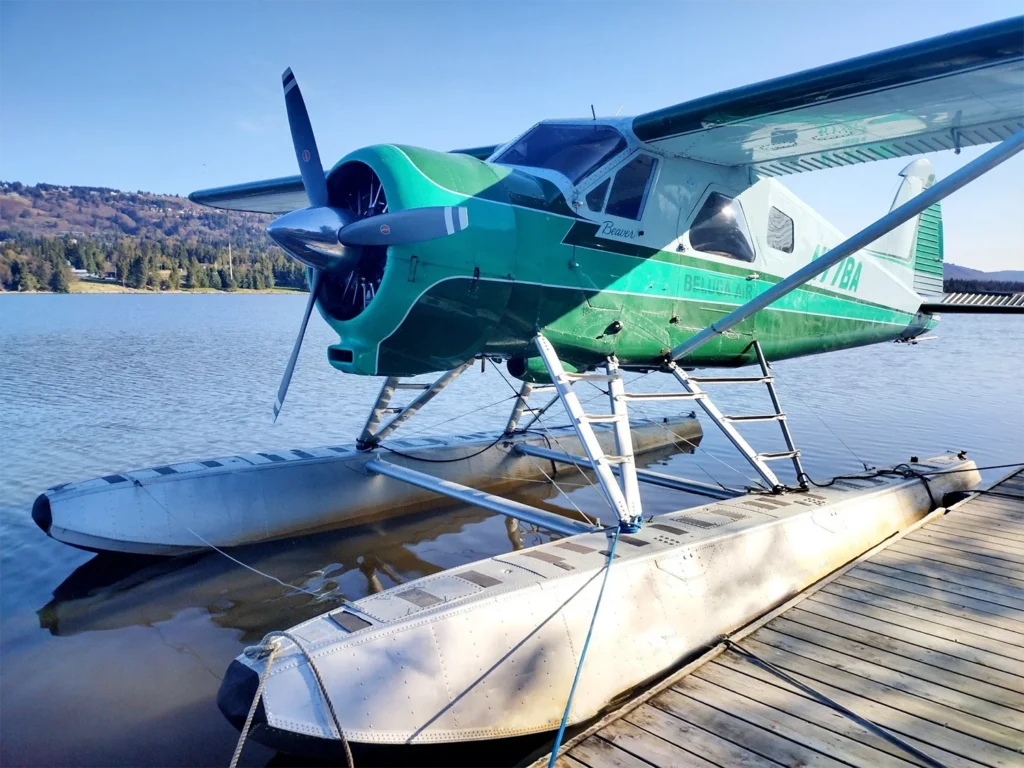
1964 De Havilland DHC-2 Beaver
Our aircraft is the airplane considered by many to be the finest “bush” aircraft ever built – the De Havilland DHC-2 Beaver. The Beaver has a first-rate safety record and has been employed by 35 armed forces throughout the world. The Beaver was designed with input from many of Canada and Alaska’s great bush pilots, resulting in a sturdy and reliable aircraft that can carry up to 1,200 lbs. on floats, and take off and land in surprisingly little room.
Engine
Our DHC-2 De Havilland Beaver on floats features a Wasp Jr. Engine. The Wasp Jr. is one of the most successful reciprocating engines ever built. Pratt & Whitney introduced it as a complement to the highly successful Wasp and Hornet families of engines in 1930. The Wasp Jr. was essentially a Wasp of reduced dimensions. Pratt & Whitney and its licensees manufactured over 39,000 versions of the R-985 until 1953 for a wide variety of military and commercial aircraft, including light transports, trainers, sport aircraft, and helicopters.
Manufacturer: Pratt & Whitney
Date: 1942
Country of Origin: United States of America
Dimensions: 117.5 x 117.5 x 109.4 cm (46.25 x 46.25 x 43.06 in.)
Materials: Overall – aluminum and steel.
Type: Radial, 9 cylinders, air-cooled
Power rating: 336 kW (450 hp) at 2,300 rpm
Displacement: 16.1 L (985 cu in)
Weight: 309 kg (682 lbs.)
Manufacturer: Pratt & Whitney Aircraft
Airframe
Model: DHC-2
Year built: 1964
Construction Number (C/N): 1549
Aircraft Type: Fixed-wing single engine
Number of Seats: 8
Number of Engines: 1
Engine Type: Reciprocating
Engine Manufacturer: Pratt & Whitney
Engine Model: R-985 Series (Wasp Jr.)
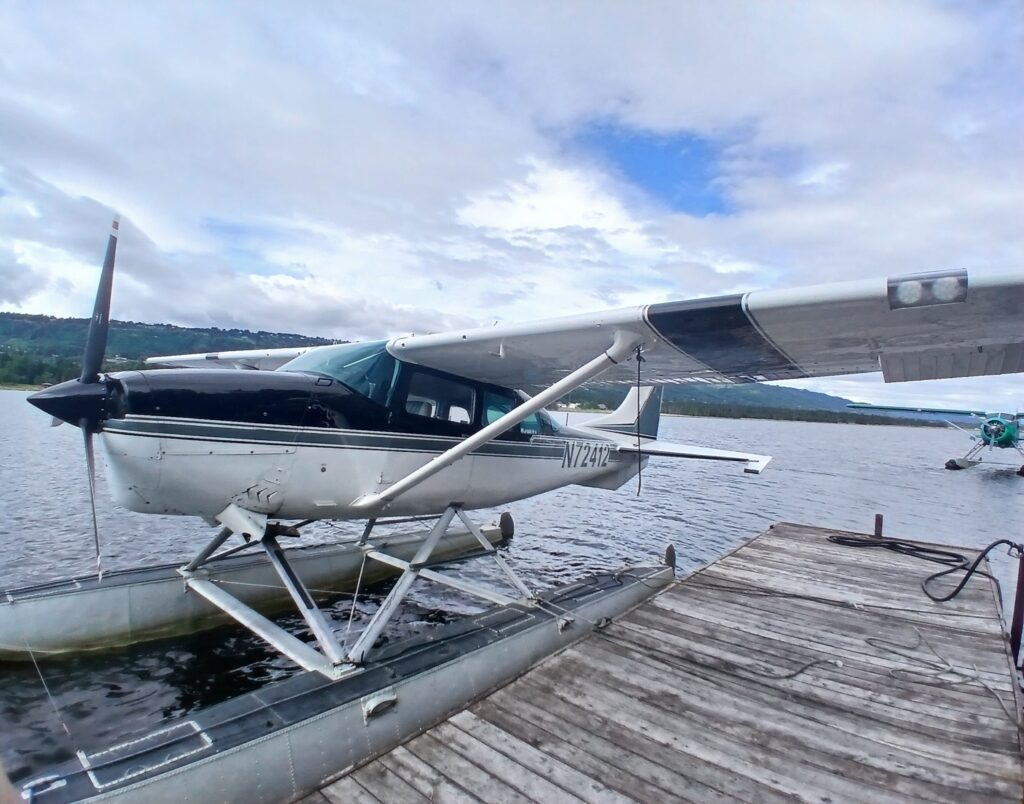
1969 Cessna 206
Our new aircraft, the Cessna 206, is lovingly known as the “SUV of the air.” First introduced in the 1946 (after the Cessna 205 model), the 206 has been widely utilized for backcountry flying as a versatile heavy-hauler, especially on floats. With a trusty 310 HP engine, this high-wing floatplane offers excellent visibility, smooth handling, and impressive short takeoff and landing capabilities. These planes have been the reliable workhorse of Alaska for decades.
At Beluga Air, safety is a priority. Beluga Air’s 206 has been meticulously maintained and is equipped for commercial operations including scenic flightseeing, remote bear viewings, custom charters, and even flight instruction. Its dual controls make it ideal for student pilots looking to gain new skills in the bush of Alaska. Available all summer long as one of our primary floatplanes, this aircraft provides a more intimate opportunity to experience all that Beluga Air and Alaska have to offer.
Engine
Our Cessna 206 on floats features a six-cylinder, air-cooled, horizontally opposed engine producing 310 horsepower. This engine enhances the aircraft’s takeoff power, climb rate, and overall handling—especially important for floatplane and backcountry operations. Known for its versatility and useful dual-aft cargo doors, the IO-540 is a perfect choice for Alaskan pilots. Combined with the 206’s lightweight design and large wing surface, the engine allows for impressive short-field performance and a higher useful load, ideal for Alaskan flying.
Manufacturer: Cessna
Date: 1969
Country of Origin: United States of America
Materials: Overall – aluminum and steel.
Type: Horizontally opposed, 6 cylinders, air-cooled
Power rating: 360 HP
Manufacturer: Lycoming
Airframe
Model: 206
Year built: 1969
Aircraft Type: Fixed-wing single engine
Number of Seats: 6
Number of Engines: 1
Engine Type: Reciprocating
Dimensions: 36’ wingspan x 28’ length
Engine
Our Piper PA-12 Super Cruiser on floats features a four-cylinder, air-cooled, horizontally opposed engine producing 160 horsepower. This engine enhances the aircraft’s takeoff power, climb rate, and overall handling—especially important for floatplane and backcountry operations. Known for its reliability and ease of maintenance, the O-320 is a popular choice for bush pilots. Combined with the PA-12’s lightweight design and large wing surface, the engine allows for impressive short-field performance and a higher useful load, ideal for Alaskan flying.
Manufacturer: Piper
Date: 1947
Country of Origin: United States of America
Materials: Overall – aluminum and steel.
Type: 0-320
Power rating: 160 HP
Manufacturer: Lycoming
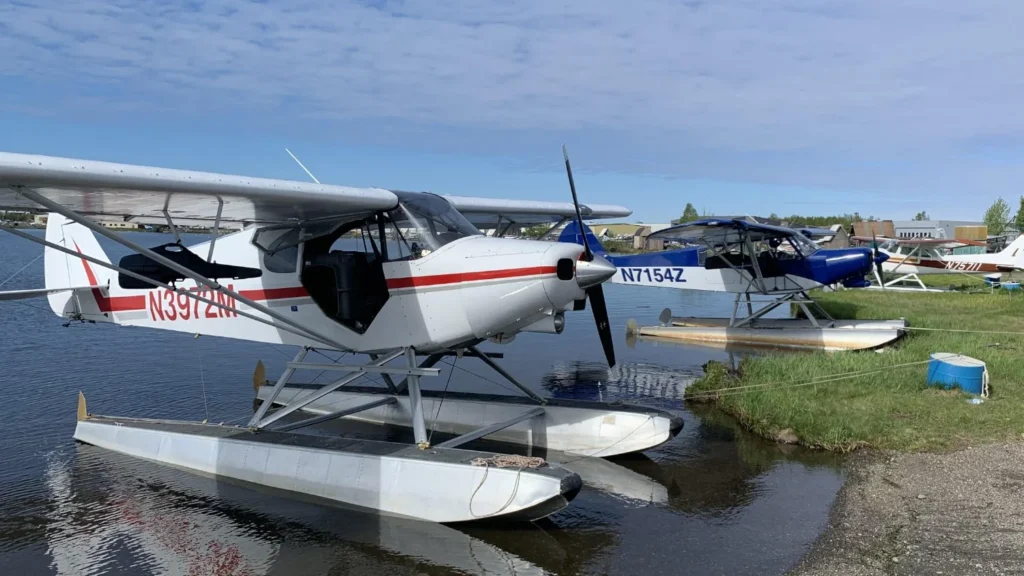
1947 Piper PA-12 Super Cruiser
The Piper PA-12 Super Cruiser, is a true Alaskan workhorse—versatile, reliable, and built for adventure. First introduced in the late 1940s, the PA-12 is celebrated for its rugged design and outstanding performance on floats. With its powerful 160 HP engine, this high-wing floatplane offers excellent visibility, smooth handling, and impressive short takeoff and landing capabilities—perfect for Alaska’s remote and wild landscapes.
The Beluga Air PA-12 has been meticulously maintained and is equipped for classic stick-and-rudder flight instruction. Its dual controls make it ideal for student pilots looking to learn in a true bush plane environment. Available May through October, this aircraft provides a one-of-a-kind opportunity to experience the skies of Alaska the way few ever do—up close and unforgettable.
Airframe
Model: PA-12
Year built: 1947
Aircraft Type: Fixed-wing single engine
Number of Seats: 3
Number of Engines: 1
Engine Type: Reciprocating
Dimensions: 37.5’ wingspan x 25’ length